

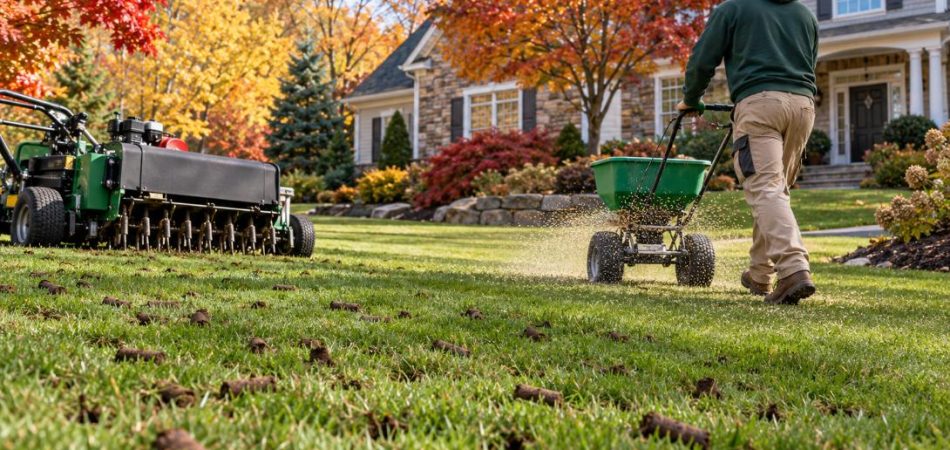
As the leaves begin changing color across Sparta, NJ, homeowners often notice their lawns looking thinner, patchier, or less vibrant after a long summer. Between summer heat, regular foot traffic, and changing soil conditions, even well-maintained lawns can struggle to stay healthy.
Fall provides an excellent opportunity to address these problems before winter arrives. Two particularly valuable lawn care practices are core aeration and overseeding, which work together to improve soil conditions, encourage thicker grass, and prepare lawns for healthier spring growth.
Quick answer: Fall aeration helps relieve compacted soil by removing small plugs of earth, allowing air, water, and nutrients to move more easily into the root zone. Overseeding introduces new grass seed into an existing lawn to fill thin areas and improve turf density. When properly timed and combined, these treatments help cool-season lawns recover from summer stress and develop stronger roots before winter.
What Sparta Homeowners Should Know About Fall Lawn Care
Fall lawn care in Sparta focuses on repairing summer damage, supporting root development, and giving cool-season grass enough time to establish before freezing temperatures arrive. Aeration and overseeding are especially useful when soil compaction and thinning turf occur together, but timing and existing lawn conditions determine the best approach.
Here are several important considerations:
-
Early fall is the preferred seeding period. Cooler temperatures and reduced competition from summer annual weeds create favorable growing conditions.
-
Compacted soil can limit root development. Frequently used lawns and high-traffic areas around Sussex County properties may benefit from core aeration.
-
Overseeding improves grass density. Introducing appropriate grass varieties can help fill bare patches and reduce the open spaces where weeds establish.
-
Local shade conditions matter. Lawns near Lake Mohawk and other wooded areas may require shade-tolerant seed mixtures.
-
Proper watering is essential. New grass seedlings need consistent surface moisture, even when autumn temperatures feel comfortable.
Why Aeration and Overseeding Matter for Local Lawns
Aeration and overseeding are valuable for local lawns because they address two different problems: restricted root growth and declining grass density. Used together, they can improve growing conditions while introducing new turfgrass into thin areas, helping lawns better withstand the seasonal stresses common in northwestern New Jersey.
How core aeration improves soil health
Core aeration uses specialized equipment to remove small plugs of soil from the lawn.
This process creates openings that can:
-
Improve movement of air and water into the soil.
-
Reduce surface-level soil compaction.
-
Support deeper, healthier root growth.
-
Improve growing conditions for existing grass.
-
Create opportunities for better seed-to-soil contact.
Unlike spike aeration, which pushes soil aside, core aeration physically removes plugs and provides more effective relief from shallow compaction.
This can be particularly helpful around play areas, walking paths, and frequently used sections of a residential yard.
Why overseeding is equally important
Overseeding involves spreading new grass seed into an existing lawn without removing all the established turf.
For local cool-season lawns, suitable seed selections may include tall fescue, Kentucky bluegrass, perennial ryegrass, and certain fine fescues. The right combination depends on sunlight, drainage, traffic, and maintenance expectations.
Overseeding can help improve lawn density, repair thinning areas, and create more consistent grass coverage. However, seed still needs contact with soil and appropriate moisture to germinate successfully.
Combining aeration and overseeding often produces better renovation conditions than simply spreading seed over compacted ground.
Local Data and the Best Time for Fall Lawn Care
Rutgers New Jersey Agricultural Experiment Station identifies late summer through early fall as the preferred establishment period for cool-season lawns. Its lawn-seeding guidance lists August 15 through October 5 as the general primary seeding window for northern New Jersey, with earlier establishment within that period being preferable.
This guidance is particularly relevant in Sussex County, where cooler autumn weather can shorten the growing period available to new seedlings.
Rutgers also identifies soil compaction, excessive shade, improper drainage, and moisture stress as factors that can contribute to declining lawn health.
For local property owners, these recommendations lead to several practical decisions:
-
Plan major overseeding projects for late summer or early fall rather than waiting until leaves begin falling heavily.
-
Schedule core aeration when the lawn is actively growing and the soil is moist but not saturated.
-
Select grass seed based on the actual yard conditions rather than choosing a generic mixture.
-
Consider soil testing before adding lime or fertilizer.
By mid-October, the recommended northern New Jersey seeding window has generally passed. At that point, homeowners should evaluate whether to postpone seeding rather than risk poor establishment before winter.
How Fall Lawn Problems Affect Local Properties
Fall lawn problems affect local properties by weakening grass coverage just as lawns enter colder weather. Thin turf can leave exposed soil vulnerable to erosion, especially on sloped yards, while compacted surfaces may limit water infiltration and contribute to puddling after substantial rainfall.
Properties near Sparta Mountain and other wooded sections of the township can face additional challenges from shade, tree-root competition, and accumulated fallen leaves.
For homeowners, these conditions may create more than cosmetic concerns. Persistent bare patches can make outdoor spaces muddy, encourage weed establishment, and increase the amount of lawn repair needed the following growing season.
At The Cutting Edge Landscaping LLC, we believe effective fall lawn care should begin with understanding why the grass is struggling. Addressing underlying conditions helps determine whether aeration, overseeding, drainage improvements, or another treatment will provide the most appropriate solution.
Warning Signs Your Lawn Needs Aeration and Overseeding
Warning signs that a lawn may need aeration and overseeding include thinning grass, compacted ground, poor drainage, and areas that struggle to recover from normal use. Although these symptoms can have several causes, recognizing them early can help homeowners choose appropriate fall maintenance before conditions worsen.
Watch for these seven signs:
-
Bare or thinning patches: Open areas remain after summer, even when surrounding grass is growing.
-
Hard, compacted soil: A screwdriver is difficult to push into the ground when the soil is reasonably moist.
-
Standing water: Rainwater frequently pools in sections of the lawn.
-
Heavy weed growth: Weeds spread into areas where healthy grass coverage has declined.
-
Slow grass recovery: Turf stays flattened or damaged after regular foot traffic.
-
Uneven lawn color: Some sections remain weak or yellow despite appropriate care.
-
Excessive surface thatch: A dense layer of dead organic material interferes with water movement and seed-to-soil contact.
These symptoms do not automatically mean every lawn requires the same treatment. Poor drainage, insects, disease, and severe shade may need separate attention.
When to Call a Lawn Care Professional
Calling a lawn care professional makes sense when compaction, thinning grass, drainage concerns, or unsuccessful seeding attempts persist despite routine maintenance. A property-specific evaluation can help determine whether aeration and overseeding are appropriate or whether another condition must be corrected first.
Homeowners can safely inspect bare patches, monitor soil moisture, evaluate shade, and check for obvious compaction.
Professional assistance is especially useful when:
-
A large portion of the lawn has deteriorated.
-
The yard contains steep slopes or difficult equipment access.
-
Drainage issues repeatedly cause standing water.
-
Grass fails to establish despite previous seeding attempts.
-
Underground irrigation lines or other shallow utilities need to be identified before aeration.
We can help homeowners think through the most suitable lawn improvement approach based on existing turf conditions and the time of year.
Common Causes of Thin and Unhealthy Lawns in Sussex County
Common causes of thin lawns in Sussex County include soil compaction, summer moisture stress, excessive shade, unsuitable grass varieties, and drainage problems. Understanding the underlying cause matters because adding new seed alone may not correct the conditions that weakened the original grass.
1. Soil compaction
Repeated mowing, outdoor activities, and equipment traffic can compress soil, reducing space for air and water movement.
2. Summer heat and inconsistent moisture
Hot, dry periods can stress cool-season grass. Some turf may enter temporary dormancy, while prolonged stress can cause lasting damage.
3. Tree shade and root competition
Wooded properties around Lake Mohawk can have areas where grass competes with trees for sunlight, moisture, and nutrients.
4. Poor drainage
Low spots and poorly draining soils may remain excessively wet, limiting root health and promoting turf problems.
5. Improper lawn care practices
Repeatedly cutting grass too short, choosing unsuitable seed, or fertilizing without understanding soil needs can weaken otherwise manageable lawns.
Identifying these issues helps avoid repeatedly reseeding areas where the underlying growing conditions remain unfavorable.
Fall Prevention and Lawn Maintenance Tips
Fall lawn maintenance should support healthy root development while protecting newly established grass. In Sparta, the most effective approach is to combine correctly timed aeration and overseeding with appropriate mowing, watering, leaf management, and soil testing rather than relying on a single treatment.
A practical fall maintenance routine includes:
-
Aerate when appropriate: Focus on actively growing turf with compacted soil, not frozen or saturated ground.
-
Overseed during the recommended window: Give new grass adequate time to establish before winter.
-
Maintain consistent moisture: Keep the upper soil layer moist during germination, then gradually transition to deeper, less frequent watering as roots develop.
-
Control leaf accumulation: Remove or mulch excessive leaves before they smother grass seedlings.
-
Follow soil test recommendations: Apply lime and nutrients only where appropriate, following New Jersey fertilizer requirements.
-
Limit traffic on new grass: Protect seeded areas until turf becomes established.
Homeowners near lakes, streams, and drainage features should also prevent seed, soil, and fertilizer from washing into nearby waterways.
Expected Results From Aeration and Overseeding
Aeration and overseeding can improve soil conditions and increase lawn density, but results develop gradually and vary by grass type, weather, soil condition, and maintenance. Homeowners should expect a period of visible soil plugs and new grass establishment rather than an immediately transformed lawn.
Following treatment:
-
Small soil plugs may remain visible until they break down.
-
Germination may begin within several days to several weeks, depending on the grass variety and conditions.
-
Thin areas can gradually develop additional grass coverage.
-
Root systems continue developing as seasonal growing conditions allow.
-
Additional improvement may become noticeable during the following spring.
Some severely damaged areas may require further renovation. Aeration also cannot correct deep drainage problems, extreme shade, or unsuitable grading by itself.
Common Fall Lawn Care Mistakes to Avoid
Common fall lawn care mistakes include seeding too late, using unsuitable grass mixtures, watering incorrectly, and overlooking the real causes of lawn damage. These errors can waste seed and labor, particularly in northern New Jersey, where the establishment period becomes shorter as autumn progresses.
Mistake 1: Waiting until late fall to overseed.
Consequence: New seedlings may not establish adequately before freezing conditions.
Better approach: Plan around the Rutgers northern New Jersey seeding window.
Mistake 2: Spreading seed without preparing the ground.
Consequence: Poor soil contact can reduce germination.
Better approach: Prepare the surface and consider core aeration when soil compaction is present.
Mistake 3: Choosing the wrong seed.
Consequence: Sun-loving turf may struggle beneath mature trees.
Better approach: Match the seed mixture to sunlight, traffic, and moisture conditions.
Mistake 4: Overwatering newly seeded areas.
Consequence: Saturated soil can encourage disease, runoff, and seed displacement.
Better approach: Maintain consistent surface moisture without creating muddy conditions.
Mistake 5: Ignoring underlying drainage problems.
Consequence: New grass may fail for the same reasons the original turf deteriorated.
Better approach: Evaluate grading and drainage before repeating lawn renovation.
A Common Local Lawn Care Scenario
A common local lawn care scenario involves a Sussex County property with a sunny front yard, a heavily shaded backyard, and a frequently traveled walkway. After summer, the grass near the walkway becomes compacted while shaded sections develop thin, uneven growth.
Applying one treatment uniformly across the entire property may not deliver the best results.
A more targeted plan could involve core aeration in compacted sections, overseeding with grass varieties suited to each area’s sunlight exposure, and adjusting watering practices to prevent excessive moisture in the shaded yard.
This is an illustrative scenario, not a documented customer project. It shows why evaluating conditions across an individual property matters.
Related Lawn Care Solutions for Healthier Grass
Related lawn care solutions include core aeration, overseeding, soil testing, drainage correction, and ongoing mowing and maintenance. Each addresses a different aspect of lawn health, and the most effective combination depends on the property’s existing grass coverage, soil conditions, and seasonal timing.
For homeowners considering improvements, useful options include:
-
Core aeration: Addresses shallow soil compaction.
-
Overseeding: Adds grass to thin or sparse turf.
-
Soil testing: Identifies pH and nutrient needs.
-
Lawn renovation: Helps restore more extensively deteriorated areas.
-
Seasonal maintenance: Supports grass establishment and ongoing turf health.
Our approach is to encourage lawn care decisions that fit the property instead of assuming every yard needs identical treatments.
Comparing Your Fall Lawn Care Options
Comparing fall lawn care options helps homeowners choose between minor maintenance, targeted overseeding, combined aeration and overseeding, or more extensive renovation. The best choice depends on whether the lawn is primarily thin, compacted, poorly drained, or significantly damaged.
| Lawn condition | Potential approach |
|---|---|
| Generally healthy turf with a few thin areas | Targeted overseeding and appropriate maintenance |
| Compacted soil with sparse grass | Core aeration followed by overseeding |
| Extensive bare areas and weed coverage | More comprehensive lawn renovation |
| Recurring standing water | Drainage evaluation before seeding |
| Healthy lawn without significant compaction | Routine seasonal maintenance |
DIY overseeding may be practical for small, accessible areas. Larger lawns, uneven terrain, significant compaction, and complex growing conditions can make professional evaluation and equipment more useful.
Service Areas Around Sparta, NJ
The fall lawn care considerations discussed here apply to Sparta and neighboring Sussex County communities, including Andover Township, Byram Township, Ogdensburg, and Hardyston Township. Properties throughout this part of northwestern New Jersey can experience similar seasonal turf challenges, although soil, drainage, and shade conditions vary from yard to yard.
Homeowners can contact us to discuss their property and confirm current service availability.
The Cost of Ignoring Fall Lawn Problems
Ignoring fall lawn problems can allow compaction, thinning turf, and drainage difficulties to persist into the next growing season. Bare soil may become more vulnerable to erosion, weeds may occupy thinning areas, and larger sections of turf may eventually require renovation rather than minor repair.
Delaying overseeding also means missing the preferred fall establishment period. Once temperatures become too cold for dependable germination, property owners may need to wait until another suitable planting window.
Addressing problems at the right time can reduce unnecessary repeat work and help preserve existing grass.
Frequently Asked Questions About Fall Aeration and Overseeding
Fall aeration and overseeding questions typically focus on timing, soil conditions, watering, and the benefits of combining both treatments. For local homeowners, the answers depend on northern New Jersey’s cool-season growing patterns, existing grass health, and whether the lawn has enough time to recover before winter.
1. When is the best time to aerate and overseed in Sparta, NJ?
Late summer through early fall is the preferred period for combined aeration and overseeding. Rutgers identifies August 15 through October 5 as the general northern New Jersey seeding window, with earlier dates preferable. Actual scheduling should account for active grass growth, soil moisture, forecast conditions, and adequate establishment time.
2. Is aeration necessary before overseeding?
Aeration is not necessary for every overseeding project, but it is especially beneficial when soil is compacted. Removing soil cores improves surface soil conditions and can create opportunities for better seed-to-soil contact. Lawns without significant compaction may respond well to other preparation methods, including targeted soil loosening or slit seeding.
3. How often should Sussex County lawns be aerated?
Aeration frequency should depend on soil compaction and lawn use rather than a fixed annual schedule. Heavily trafficked turf may require more frequent attention, while healthy, well-draining lawns may not need yearly aeration. Checking soil firmness, infiltration, and turf performance helps determine when another treatment is justified.
4. Can overseeding help lawns with heavy shade near Lake Mohawk?
Yes, overseeding can improve moderately shaded lawns near Lake Mohawk when appropriate shade-tolerant grass varieties are selected. Fine fescues may be useful in certain low-light situations. However, grass still needs sufficient sunlight, and heavily shaded areas may require pruning where appropriate or alternative landscaping instead of repeated seeding.
5. How soon should I water after overseeding my lawn?
Water newly seeded areas promptly and maintain moisture in the upper soil layer during germination. Avoid both dry seedbeds and consistently muddy conditions. Once seedlings develop stronger roots, gradually water less frequently but more deeply. Always follow any current local water-use restrictions, which may affect overseeding schedules.
6. Will aeration and overseeding prevent weeds in Sparta lawns?
Aeration and overseeding can help reduce opportunities for weeds by encouraging denser, healthier turf, but neither treatment guarantees weed prevention. Bare areas, poor drainage, unsuitable mowing practices, and ongoing soil stress can still encourage weeds. A longer-term maintenance approach should address these contributing conditions alongside appropriate grass establishment.
7. What happens if I miss the fall overseeding window in northern New Jersey?
Missing the preferred fall overseeding window means new grass may not have adequate time to establish before winter. Homeowners can use the remaining season to assess drainage, test soil, manage fallen leaves, and plan future work. Spring seeding is possible, although it often faces greater weed competition and summer stress.
8. Should I fertilize after aerating and overseeding?
Fertilizer should be applied according to soil needs, turf condition, and New Jersey regulations. Newly established or repaired grass may benefit from appropriate nutrients, but excessive fertilization can create problems. Rutgers soil testing can help identify suitable amendments, while properties near waterways require particular attention to preventing fertilizer runoff.
Build a Healthier Sparta Lawn With the Right Fall Care
A healthier lawn begins with understanding what happens beneath the grass. Soil compaction, thinning turf, shade, and summer stress can all influence how well a lawn grows from season to season.
With appropriate timing, proper soil preparation, and the right grass seed, aeration and overseeding can help local homeowners improve lawn density and build stronger growing conditions.
At The Cutting Edge Landscaping LLC, our focus is on helping property owners make informed decisions about their outdoor spaces. Whether your lawn needs targeted improvement or a broader maintenance plan, taking the right steps at the right time can make a meaningful difference.
Give Your Sparta Lawn a Stronger Start Next Spring
A well-planned lawn care approach can help improve existing turf while addressing the conditions that contribute to thinning grass and unhealthy growth.