
Homes in Sparta, NJ often have something landscape designers elsewhere do not always contend with: wooded surroundings, sloped properties, rocky terrain, four distinct seasons, and outdoor spaces that need to look good through changing weather. That combination is influencing how local homeowners approach landscape and hardscape improvements.
The biggest landscaping and hardscaping trends in Sparta focus on creating useful outdoor living spaces that fit naturally into the property. Homeowners are combining patios, walkways, retaining walls, planting beds, lighting, drainage improvements, and gathering areas into cohesive designs rather than treating each feature as a separate project. Materials and plant choices that complement the wooded character of Sussex County are especially well suited to the area.
What local homeowners should know
-
Outdoor living spaces are becoming more integrated, with patios, seating, planting, lighting, and pathways designed together.
-
Drainage and grading deserve special attention on sloped and uneven properties common throughout the Sparta area.
-
Natural-looking stone, textured pavers, and earth-tone materials can complement the wooded character around Lake Mohawk and the New Jersey Highlands.
-
Native and regionally appropriate plants can help landscapes feel established while supporting lower-maintenance designs.
-
Four-season planning matters because hardscape materials and landscape features must handle summer storms, winter weather, and repeated freeze-thaw conditions.
Why Are Custom Outdoor Living Spaces Growing in Popularity?
Custom outdoor living spaces are popular because they turn underused yards into functional extensions of the home while allowing the design to respond to the property’s terrain, views, architecture, and surrounding landscape. In Sparta, that often means creating comfortable gathering spaces without making a wooded or naturally sloped property feel overly developed.
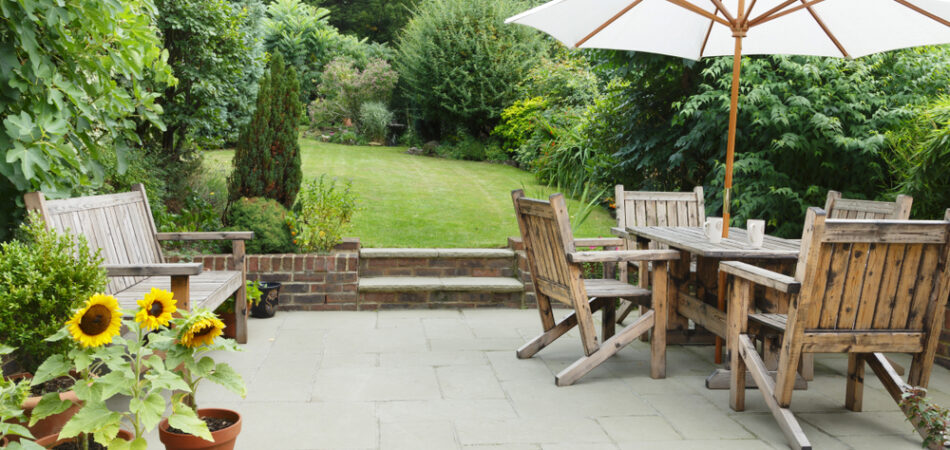
Instead of installing a simple rectangular patio, homeowners may create defined areas for dining, cooking, conversation, or relaxing around a fire feature. Seat walls, steps, planting pockets, landscape lighting, and walkways can connect those areas.
Around Lake Mohawk and other established parts of town, the goal may be to preserve the character of the property while making the outdoor space more comfortable and accessible.
The Cutting Edge Landscaping LLC helps homeowners consider these features as parts of a complete landscape. We can look at how hardscape areas, plantings, grades, and circulation work together rather than viewing each improvement in isolation.
What Local Conditions Influence Landscaping and Hardscaping Trends?
Sparta’s wooded setting, seasonal temperature changes, precipitation, slopes, and varied terrain make durability and site-specific planning major influences on local landscape design. A feature that looks attractive initially still needs to manage water, seasonal movement, plant growth, and everyday use over the long term.
Properties in Sussex County can vary considerably. Some yards have open lawn areas, while others sit among mature trees or have significant changes in elevation. Areas closer to the New Jersey Highlands can also have the rocky, rolling character associated with northern New Jersey.
These conditions make drainage, base preparation, grading, plant selection, and material placement important parts of landscape planning.
Local Field Observations
Rather than treating current design preferences as formal statistics, it is more useful to view these trends as practical directions homeowners can consider for northern New Jersey properties. The strongest designs balance appearance with how the yard actually functions through rain, summer use, falling leaves, freezing temperatures, and winter weather.
Which Hardscaping Styles Work Well With Sparta Homes?
Natural-looking hardscapes with textured surfaces, complementary colors, and defined transitions work especially well because they can blend with Sparta’s wooded surroundings and diverse home styles. The objective is usually not to make every surface match, but to create a coordinated palette that feels intentional.
Popular design directions include:
-
Paver patios with defined borders or contrasting patterns
-
Natural or natural-looking stone accents
-
Walkways that follow the property’s existing contours
-
Seat walls that define gathering areas
-
Retaining walls incorporated into planting beds
-
Steps that make elevation changes easier to navigate
-
Fire features positioned as focal points
For properties near Lake Mohawk, rustic or natural material palettes may help an outdoor space complement the area’s distinctive character. Elsewhere in town, cleaner paver patterns and structured planting beds can work well with newer or more formal homes.
How Are Homeowners Using Landscaping to Soften Hardscape Areas?
Homeowners are using layered planting beds, ornamental grasses, shrubs, perennials, and strategically placed trees to soften patios and walls so outdoor spaces feel connected to the surrounding landscape. This approach is particularly useful on properties where mature woods or existing vegetation already create a strong natural backdrop.
Planting can also define outdoor rooms without constructing additional walls. A carefully positioned bed can separate a dining patio from an open lawn, soften the edge of a retaining wall, or provide seasonal interest beside a walkway.
Native and regionally appropriate plants are worth considering because plant selection should account for northern New Jersey’s seasonal conditions, sunlight, soil, moisture, and the specific characteristics of the property.
Why Is Drainage Becoming Part of Landscape Design?
Drainage is increasingly integrated into landscape design because attractive patios, walls, lawns, and planting beds still need a practical way to handle runoff and changing grades. On sloped Sparta properties, water movement should be considered early rather than addressed only after puddling, washout, or erosion becomes noticeable.
Warning signs that drainage deserves closer attention include:
-
Water repeatedly collecting beside a patio or walkway
-
Soil washing out after heavy rain
-
Mulch moving downhill or out of planting beds
-
Persistently soggy sections of lawn
-
Visible channels forming on slopes
-
Water collecting near retaining walls
-
Low spots remaining wet significantly longer than surrounding areas
A homeowner can safely observe where water travels during rainfall. Significant grading changes, drainage installations, retaining structures, or recurring erosion are better evaluated professionally because altering runoff in one area can affect another part of the property.
What Are the Most Useful Outdoor Lighting Trends?
Modern landscape lighting focuses on subtle illumination of walkways, steps, gathering spaces, trees, and architectural features instead of flooding the entire property with bright light. For Sparta homes surrounded by mature trees or darker residential settings, carefully placed lighting can improve nighttime usability while preserving a comfortable outdoor atmosphere.
Lighting can be incorporated along paths, near elevation changes, around patios, and within planting areas. Uplighting selected trees or landscape features can add depth without requiring every portion of the yard to be equally bright.
Planning lighting alongside the landscape and hardscape design also makes fixture placement feel more intentional.
Are Fire Features Still a Popular Hardscape Addition?
Fire features remain a practical outdoor-living option because they create a natural gathering point and can make a patio more inviting during cooler parts of the year. In northern New Jersey, where evenings can become cool well before winter, a thoughtfully planned fire area can help homeowners use their outdoor space across more of the season.
Placement matters. The surrounding surface, seating arrangement, nearby vegetation, structures, and applicable local requirements should all be considered before installation.
A fire feature can be integrated into a larger patio or designed as a separate destination connected by a walkway.
What Common Mistakes Should Sparta Homeowners Avoid?
The most common landscape design mistakes come from choosing individual features without considering drainage, scale, circulation, maintenance, and the rest of the property. A coordinated plan can help avoid an outdoor space that looks attractive in one area but creates functional problems elsewhere.
Mistake: Building a patio without studying drainage.
Consequence: Water may collect or move toward areas where it is unwanted.
Better approach: Evaluate grading and runoff before determining final elevations.
Mistake: Choosing materials only from a small sample.
Consequence: The finished hardscape may feel disconnected from the house and surrounding landscape.
Better approach: Consider color, texture, scale, borders, and nearby materials together.
Mistake: Overfilling a new planting bed.
Consequence: Plants may become crowded as they mature.
Better approach: Design around mature plant size rather than only installation-day appearance.
Mistake: Ignoring how people move through the yard.
Consequence: Walkways and gathering areas can feel awkward or inconvenient.
Better approach: Plan natural routes between doors, patios, lawns, driveways, and activity areas.
What Does a Common Sparta Landscape Project Look Like?
A common local scenario is a sloped backyard with an aging or undersized outdoor area that does not make full use of the available property. This is an illustrative Sparta-area scenario, not a specific customer project.
A homeowner might want a larger patio for dining and entertaining but also need to manage a grade change between the house and lawn. A coordinated design could use a retaining wall to help define elevations, steps to connect spaces, planting beds to soften the hardscape, and lighting to improve evening use.
Addressing the property as one connected space can produce a more cohesive result than adding unrelated features over several years.
Which Landscaping and Hardscaping Services Support These Trends?
Custom landscape and hardscape services can bring patios, walkways, retaining walls, plantings, lighting, grading, and other outdoor features into one coordinated plan. The right combination depends on the property’s existing conditions and how the homeowner wants to use the space.
We can help homeowners think through the relationship between outdoor living areas and the surrounding landscape, including how people enter the space, where they gather, how elevation changes are handled, and how planting areas complete the design.
Should You Make Small Improvements or Plan a Complete Outdoor Transformation?
Small improvements work well when the existing landscape functions properly, while a coordinated redesign is often better when drainage, grades, circulation, hardscaping, and planting all need attention. The key is determining whether one isolated improvement will solve the problem or simply leave another part of the yard unfinished.
DIY work may be reasonable for basic seasonal cleanup, simple planting, or monitoring drainage patterns. Larger patios, structural retaining features, significant grading, complex drainage, and integrated outdoor living spaces generally benefit from professional planning and installation.
Planning the complete vision first does not necessarily mean every feature must be completed at once. It can help individual improvements fit into a logical long-term design.
Where Do We Provide Landscaping and Hardscaping Services?
Our local focus includes homeowners in Sparta and surrounding communities where terrain, wooded properties, and northern New Jersey’s seasonal conditions shape outdoor design decisions. Nearby Sussex County communities may have similar landscape considerations, including areas around Andover, Lafayette, Ogdensburg, and Franklin.
Service availability for a specific address or project should be confirmed directly with our team.
What Can Happen When Outdoor Problems Are Left Unaddressed?
Waiting to address drainage, deteriorating hardscape, erosion, or poorly functioning outdoor areas can allow relatively contained problems to affect larger portions of the landscape. Water movement can contribute to soil loss, shifting materials, or persistently wet areas, while damaged steps and uneven surfaces can make outdoor spaces less comfortable to use.
Early planning also gives homeowners more flexibility. Instead of reacting to one problem at a time, they can decide how repairs or upgrades fit into their longer-term goals for the property.
Frequently Asked Questions About Landscaping and Hardscaping in Sparta, NJ
What landscaping styles are popular in Sparta, NJ?
Natural-looking, layered landscapes are a strong fit for Sparta because they complement the wooded character of northern Sussex County. Homeowners can combine structured patios and walkways with softer planting beds, ornamental grasses, shrubs, perennials, and trees to create outdoor spaces that feel polished without looking disconnected from their surroundings.
What hardscape materials are suitable for Sparta properties?
Pavers and natural or natural-looking stone are common options because they offer numerous colors, textures, patterns, and design possibilities. The best material for a Sparta property depends on the home’s architecture, intended use, site conditions, installation requirements, maintenance expectations, and how the material fits with the surrounding landscape.
Does freeze-thaw weather matter when planning hardscaping in northern New Jersey?
Yes, freeze-thaw conditions should be considered when planning hardscaping in northern New Jersey. Proper preparation, drainage, material selection, and installation methods all influence long-term performance. Because local patios, walkways, steps, and walls experience seasonal weather changes, the structure beneath visible materials deserves as much attention as the finished surface.
How should I landscape a sloped yard in Sparta?
A sloped yard can often be improved by coordinating grading, retaining features, steps, pathways, planting beds, and drainage. The appropriate approach depends on the severity of the slope and existing site conditions. A professional evaluation is especially useful when significant elevation changes, erosion, water movement, or retaining structures are involved.
Are native plants a good option for Sussex County landscapes?
Native and regionally appropriate plants can be valuable components of Sussex County landscapes when they are matched to the site’s actual conditions. Sun exposure, soil, moisture, available space, and desired maintenance level should guide selection. A successful planting plan considers how plants will perform and look as they mature.
Can a patio be built on a property with significant elevation changes?
Yes, many properties with elevation changes can accommodate patios, but the design may require careful grading, steps, retaining features, or other site preparation. In the rolling terrain around Sparta and the New Jersey Highlands, evaluating elevations early can help determine how the patio should connect with the house and surrounding yard.
Should landscape lighting be planned before or after a new patio?
Landscape lighting is best considered during the overall planning process, even if installation occurs later. Identifying likely fixture locations around steps, walkways, patios, walls, and planting areas can create a more integrated result and reduce the chance that lighting feels like an afterthought.
Can landscaping and hardscaping be completed in phases?
Yes, a landscape can often be completed in phases when the overall design is considered first. For a Sparta property, homeowners might prioritize grading and major hardscape work before adding certain plantings or finishing details. A long-term plan helps later improvements connect logically with work that has already been completed.
Create an Outdoor Space Designed for Your Sparta Property
A successful landscape should feel like it belongs with the home, the terrain, and the surrounding northern New Jersey environment. We focus on helping homeowners create outdoor spaces that combine practical use, thoughtful hardscaping, planting, and site-specific planning.